

“Citizen Science encompasses a wide range of activities carried out by several actors at multiple levels. We find massive and occasional virtual interactions on a global scale as well as regular, proactive and continuous involvement in local environments. There is no single definition of Citizen Science but rather a series of definitions that reveal the dynamics of this research approach which is continually evolving and implies new collaborative activities and shared objectives between the main stakeholder groups”.
Citizen science is the active participation of citizens in scientific research activities. Citizens voluntarily contribute their time, effort and, in some cases, resources to:
Citizen science democratises research, promotes scientific education and generates valuable knowledge for science and society.
The ECSA Characteristics of Citizen Science aim to answer the question of “How is Citizen Science in practice?”, providing a view of all the esential ítems that compose a successful citizen science Project.
The following infographic shows the ECSA Characteristics of Citizen Science, which aim to answer the question of “How is Citizen Science in practice?”, providing a view of all the essential items that compose a successful citizen science project.
Due to the wide range of disciplines in which citizen science can participate, there is a need to define what constitutes citizen science, as well as how it interacts with different fields.
Citizen science features the same practices as general scientific research, along with following protocols and practices in accordance with the disciplines in which the project is framed. This discipline differentiation, together with the flexibility of citizen science, ensures rigor and accurate data treatment while also preserving the communication and transparency needed to safeguard a consensual involvement of the participants, who feature in citizen science projects not as research subjects, but as active researchers.
While citizen science can be featured in all scientific fields, there is a need to define methodological practices and standards to ensure that citizen science preserves its identity.
The main disciplines in which citizen science projects have contributed are science and technology, arts and humanities, social sciences, and medical sciences and human health. To propose a successful citizen science project, it is necessary to establish standards that differentiate between established practices like participatory action research or voluntary engagement as a research subject and participation in a citizen science project, while also safeguarding the personal data of participants. The ECSA recommends using the 10 Principles of Citizen Science as a guide to create an explicit assessment of a citizen science project.
Citizen science projects can be led both by individuals (participants, researchers, or communities) and organizations (such as public bodies, institutions, and non-governmental organizations). While projects implemented for commercial use are not generally considered citizen science, they may be regarded as such if they are transparent and aligned with the 10 Principles of Citizen Science.
Participation in citizen science projects can vary in scale and engagement, with scale depending on the project's context and goals while encouraging active involvement in several phases of the research process.
Citizen science projects can also include community decision-making or educational outcomes related to scientific research. In these cases, it is recommended to ensure strong implementation of the chosen disciplinary standards to maintain scientific rigor, while establishing specific research goals and keeping science education in a supporting role.
Projects involving purely financial support, such as crowdfunding, subscription fees, or donations, are not considered citizen science because they do not incorporate participation in scientific research.
However, citizen science projects may receive funding. Participants can provide financial contributions to participate, as long as this does not affect social inclusion. Participants may also receive incentives to promote the project or improve the quality of the data collected.
Citizen science projects can generate a wide range of data, which needs to be treated according to the disciplinary standards of the field while safeguarding the goals and needs of participants.
Therefore, the data collection process should include protocols and datasets that enable the collection of high-quality information in both systematic and opportunistic ways, depending on the project's context. It should also encourage open-access practices and participant ownership of generated data while protecting personal information in sensitive contexts such as medical and social sciences, which commonly rely on digital collection tools.
This interactive infographic presents the 10 Principles of Citizen Science developed by the European Citizen Science Association (ECSA). These principles provide a framework for designing, conducting, and evaluating citizen science projects, while promoting meaningful public participation in scientific research.
This infographic presents the 10 Principles of Citizen Science developed by the European Citizen Science Association (ECSA).
Citizen science projects actively involve citizens in scientific endeavours that generate new knowledge or understanding. Citizens may act as contributors, collaborators, or project leaders and have a meaningful role in the project.
Citizen science projects have a genuine scientific outcome, such as answering a research question or informing conservation actions, management decisions, or environmental policy.
Both professional scientists and citizen scientists benefit from participation. Benefits may include research publications, learning opportunities, personal enjoyment, social benefits, and the satisfaction of contributing to scientific evidence that can help address local, national, and global challenges.
Citizen scientists may, if they wish, participate in multiple stages of the scientific process, including developing research questions, designing methodologies, collecting and analysing data, and communicating results.
Citizen scientists receive feedback about how their contributions are being used and what scientific, policy, or societal outcomes result from the project.
Citizen science is a valid research approach with its own limitations and biases. At the same time, it promotes greater public engagement and contributes to the democratization of science.
Project data and metadata should be made publicly available whenever possible, and results should ideally be published in open access formats. Exceptions may apply where privacy, confidentiality, or security concerns exist.
Citizen scientists should be appropriately recognized and acknowledged in project outputs and publications.
Citizen science programmes should be evaluated for their scientific outcomes, data quality, participant experience, and broader societal or policy impact.
Project leaders should consider legal and ethical issues related to copyright, intellectual property, data sharing agreements, confidentiality, attribution, and the environmental impact of project activities.
One possible way to classify citizen science projects is to consider the following three wide classes: contributory projects, collaborative projects, co-created projects, autonomous projects and contractual projects.
The following infographic shows the challenges of citizen science that are being faced today, together with posible solutions that can be implemented to fase each of them.
The following infographic shows the challenges of citizen science that are being faced today, together with possible solutions that can be implemented to face each of them.
Citizen science is not consolidated in most national research programmes, which makes securing public funding a challenge. This limits the advancement of citizen science projects and practices and may impact the quality of the data collected.
Possible solutions:
During COVID-19, there was a need to find alternative ways of communication and interaction between communities, leading to an evolution in how participants can interact with citizen science projects while maintaining social distancing.
This paradigm shift highlighted the need for innovative methods and tools that keep citizen science efforts efficient and coordinated when dealing with unusual circumstances or contexts, while always prioritizing inclusivity and accessibility.
Possible solutions:
There is an increasing demand for evidence demonstrating the impact of citizen science across different countries. This includes showing how citizen science improves research practices, generates more representative data, promotes democratic values, and increases engagement and motivation in science education.
Possible solutions:
Rapid advances in data science and artificial intelligence have raised concerns that tasks currently performed by participants may eventually be replaced by algorithms, potentially reducing participation in citizen science projects.
Possible solutions:
Rapidly evolving social and technological circumstances may reduce the motivation of different communities to participate in citizen science initiatives.
Possible solutions:
There is a need to expand the impact of citizen science beyond academic environments, enabling projects that further strengthen the democratization of science.
Participants outside academia should be able to take leadership roles in projects related to their interests, increasing the relevance and value of first-hand community knowledge.
Possible solutions:
The aim of Citizen Science is to create a bridge between participants and researchers, creating opportunities for communities to take part in the data collection process in an easy and accessible way while also maintaining the rigor of scientific research.
Therefore, the tools used for Citizen Science should:
Document data about their surroundings and experiences
During the 2024 World Water Day, BESS students and faculty members spearheaded an initiative to educate young children and pre-university students from different schools in Segovia on water conservation and sustainability practices. The event, held at the Casa de la Moneda, goes hand in hand with the BESS’s mission in engaging students with citizen science activities that contribute to research and hone their leadership skills.
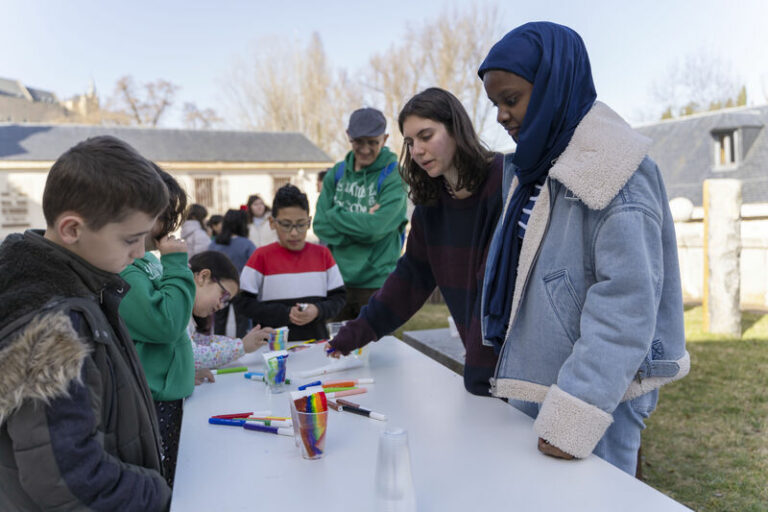
“Participation of students in the Water Day at IE University offers students of the Bachelor in Environmental Sciences for Sustainability a unique opportunity to engage in citizen science initiatives with school children. This hands-on experience fosters a sense of responsibility and empowerment among students, equipping them with the knowledge and tools to inspire positive change in their communities.”
Juan Carlos Silva-Tamayo, Academic Director at BESS
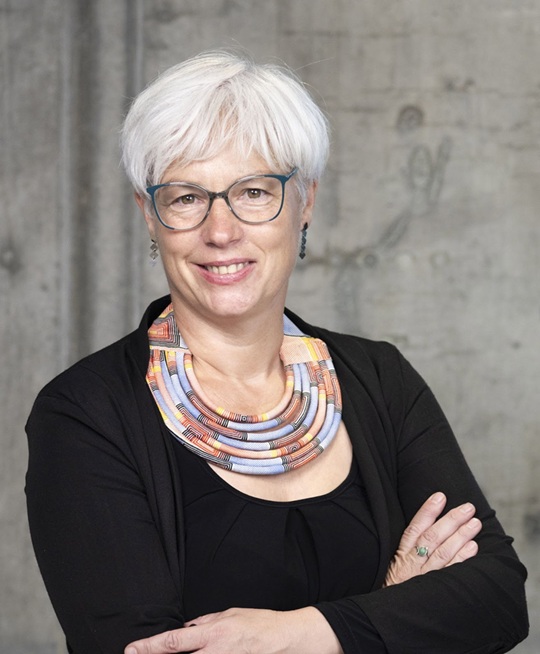
Carme Hughet
Carme Hughet, Assistant Professor of Environmental Science and a board member of the Geochemical Society, participated in 2017 in a project involving an Amazonian community facing water contamination from illegal mining. Carme and her team developed sensors to help locals independently monitor water quality. “We had the skills, they had the need—it was a perfect match,” she shared.
As a result of the researcher team, a framework was published that would allow the Colombian government, citizens and stakeholders to assess the impacts of mining development on regional water resources in the rivers.
Her advice for IE University students? “Get involved. Find the problems and use your unique skills to contribute. The key is to act.”
Carme’s story is a powerful reminder that collaboration and action can drive meaningful environmental change.
The route includes 10 strategic ports, where the following will be combined:
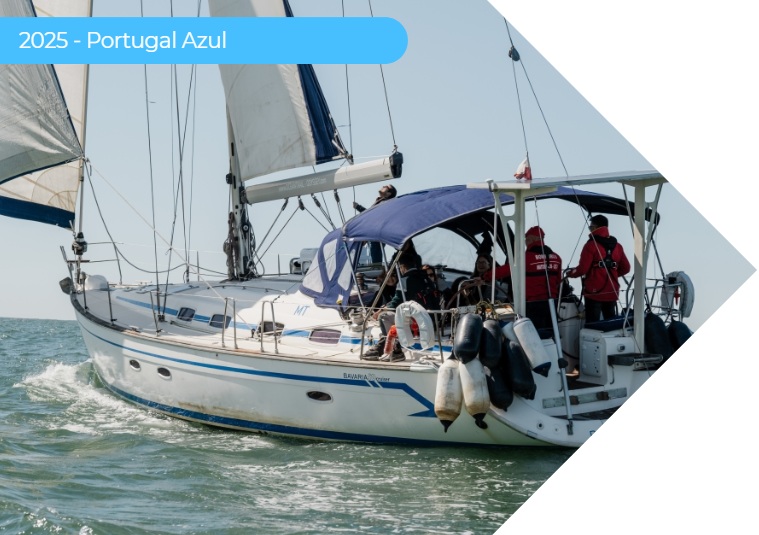
2025 – Portugal Azul
Portugal Azul is the natural continuation of La España Azul. Over the course of three months, he will sail along the Portuguese Atlantic coast, including Madeira and the Azores. His aim is to document marine pollution and raise collective environmental awareness.
The expedition is supported by Sun&Blue, the Rotary Clubs of Portugal, the University of Coimbra and the PIEP. It also involved IE Uiversity students who took part in the Portugal Azul Student Challenge, which promoted real proposals linked to the SDGs and sustainability.

2022 – España Azul
La España Azul is an initiative designed by Nacho Dean, the only person to ever have walked around the world and swam between five continents. After years of adventure, Nacho decided it was time to take his experiences and start working toward making a lasting impact.
His project, La España Azul, aims to generate a positive environmental impact on Spanish coasts through exploration and scientific-based research, as well as to promote sustainability and educate people about the importance of looking after our seas and oceans.
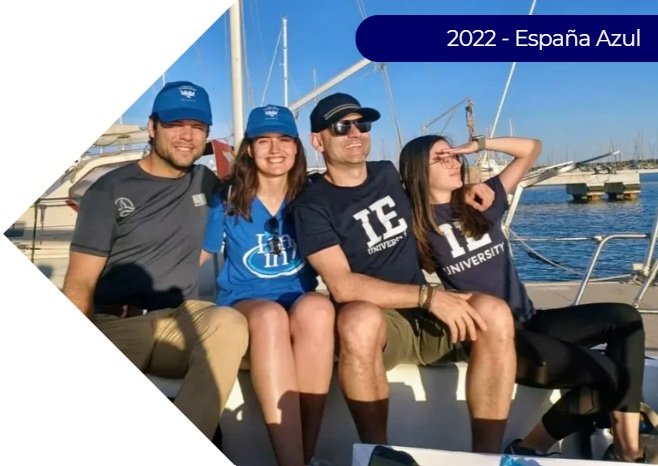
The winning students spent a weekend participating in beach clean-ups, visiting scientific institutions—such as L’Oceanogràfic in Valencia—and sailing the seas collecting samples of water.
After analyzing the samples retrieved by the students in the laboratory of the University of Cádiz, the following document detailing the findings was published in the project’s webpage.