

A researcher profile serves as a unique digital identity, enabling individuals in the research community to maintain a consistent and unmistakable identification via a unique code.
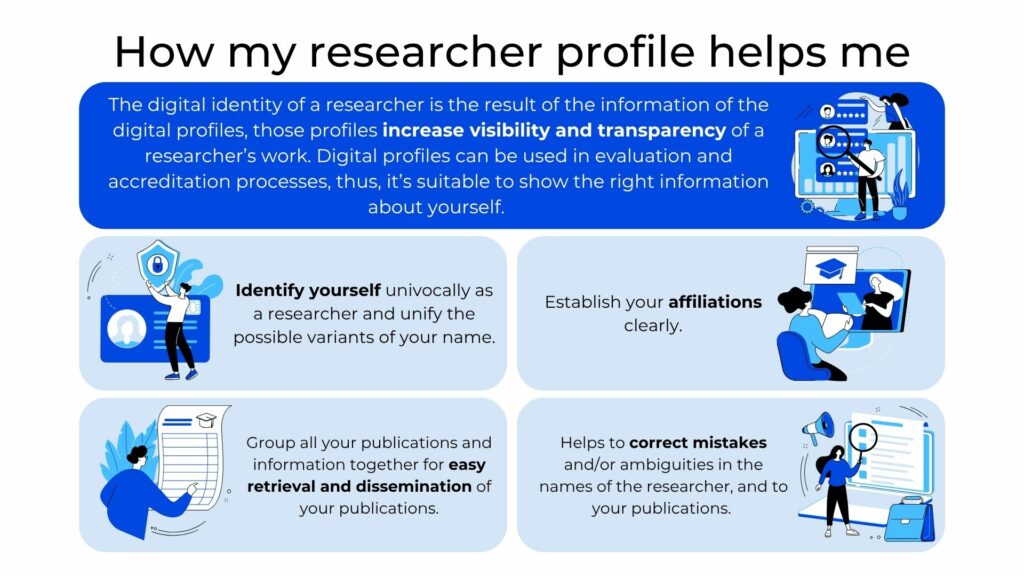
Researcher profiles allow for a standardized and direct connection to the researcher’s publications, funding and affiliations.
Researcher profiles can:
Keeping a research profile updated with the latests publications, projects and achievements will provide support in evaluation and accreditation processes. The library can help you to clean your profiles.
Some profiles require the researcher to register to set up an account, while others are generated within literature databases while allowing for manual management.
ORCID is a non-proprietary alphanumeric code to uniquely identify scientific and other academic authors and contributors. It aims to classify authorship and facilitate name disambiguation. It’s free, open, and allows full coverage of the complete career besides the academic work (education, grants, professional experience, etc.)
An ORCID ID can also be integrated in research workflows such as manuscript and grant submissions, as well as supporting automated linkages between a researcher and their professional activities.
Your ORCID ID can also be connected to an ORCID record, in which researchers can add employment details, education and qualifications, memberships, publications and grants or funding received. It is also possible to share data between the ORCID record and some funding and publication platforms.
Sign up and learn More:
Scopus Author ID is automatically generated if you have a paper in the database, so registration for a Scopus Author ID is not required.
An Scopus Author ID:
Therefore, having a SCOPUS ID allows you to easily view a list of your publications and see impact metrics related to your work, such as citation trends, co-authorship networks, and normalized citation indices, among many others.
Scopus also allows you to connect your profile to your ORCID ID, which facilitate your works in Scopus to automatically appear in your ORCID record.
NOTICE: If you want to verify whether you already have a Scopus Author ID and Profile assigned to you, login to Scopus via the Library E-Resources and Databases page and select the “Authors” tab. Afterwards, you can look up your own signature using the search bar. See the links below for help with Scopus Author ID and what to do if you need to make corrections to your profile.
Learn more:
A Web of Science researcher profile is easy to maintain and provides valuable insights into your publication and review history.
Web of Science follows the same system as Scopus, assigning authors who have published in WoS indexed journals a ResearcherID. This ID allows you to connect your profile to your publications across WoS.
A WoS Researcher Profile allows you to:
Learn more:
Your Google Scholar profile allows you to showcase your work and increase visibility to others in your field.
A Google Scholar profile allows you to:
A Google Scholar Profile provides an easy way for others to find your research and enables you to keep track of your publications and see the publications that cite your work.
Your list of publications can be updated automatically or be reviewed and manually updated. Co-authors can also be added to promote collaborations. Moreover, if a Google Scholar profile is set to ‘public’, it will appear in Google Scholar search results.
It is also possible to export publications from your Google Scholar Profile into your ORCID record using a BibTeX file (instructions here).
Sign up and learn More:
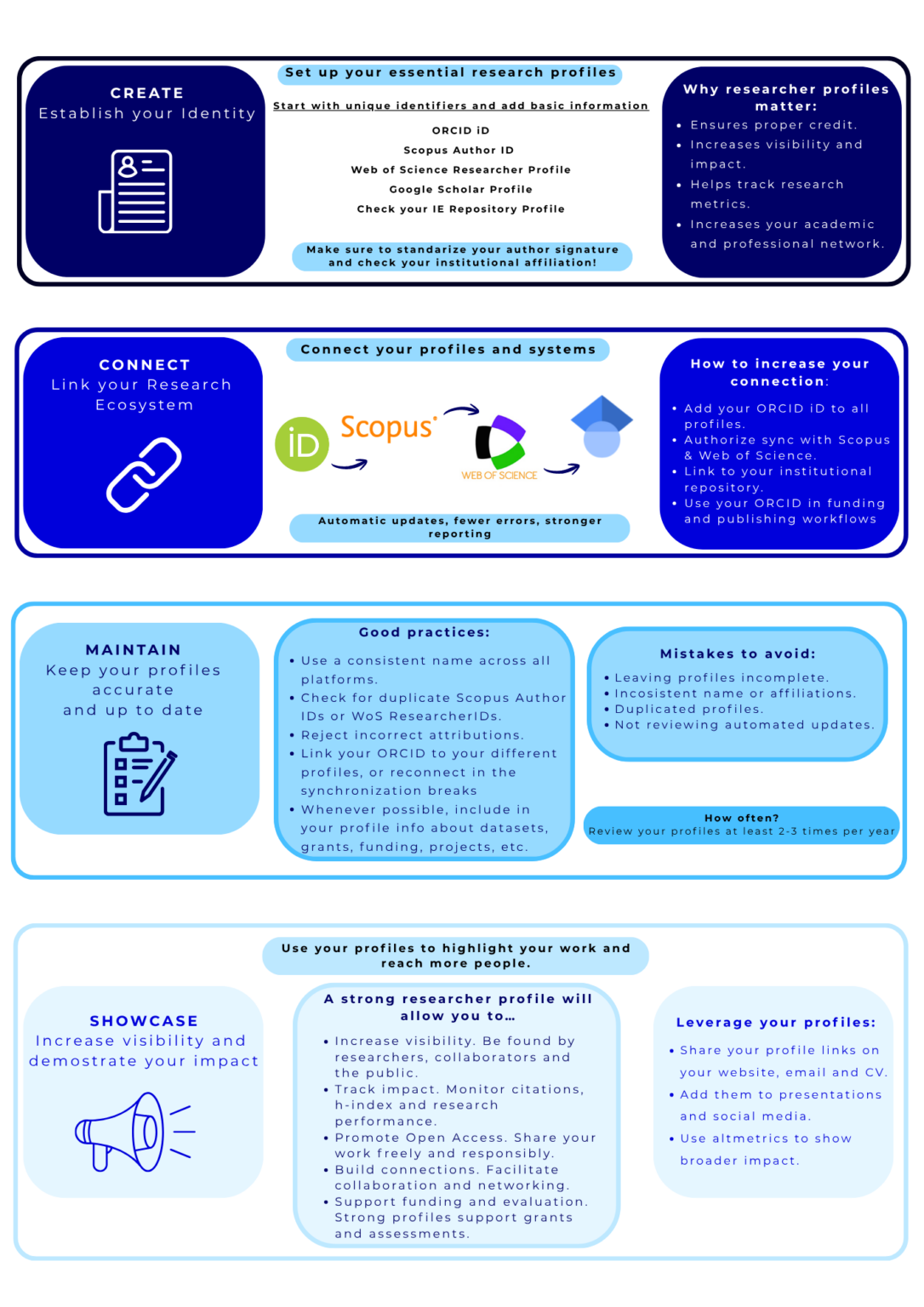
In addition, it is highly recommended to link your ORCID ID to other platforms such as Scopus and Web of Science. This simple step will help prevent potential homonymy errors and give you greater international visibility as a researcher.
Furthermore, linking your profiles to one another allows for the bidirectional transfer of publication and citation data between the databases and your profile, saving you time on manual data entry.
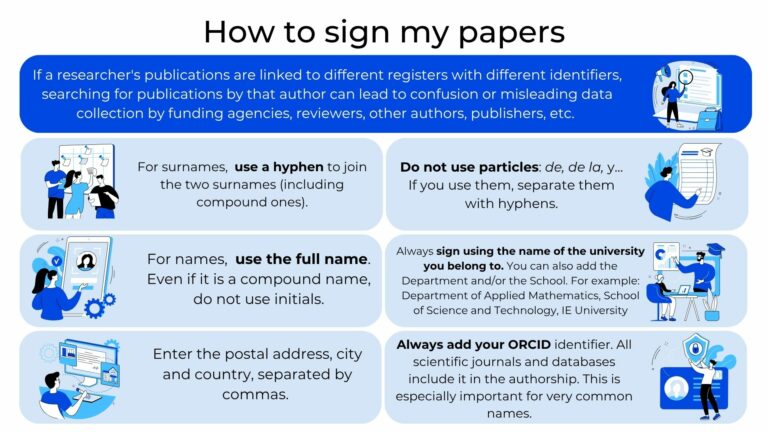
The use of a consistent name and institutional affiliation in all your publications aids to improve the visibility, retrieval, and correct attribution of your research.
The lack of standardization in researchers’ scientific names in publications and their institutions can lead to:
These issues can affect both the accurate attribution of individual research and the representation of the University’s research output in bibliographic databases. Following a standardized approach to author names and affiliations can help prevent these inconsistencies
We provide personalized support for any researcher. You can contact us anytime.
We can also take direct action in Scopus and Web of Science. We are able to:
Repository Assistance.
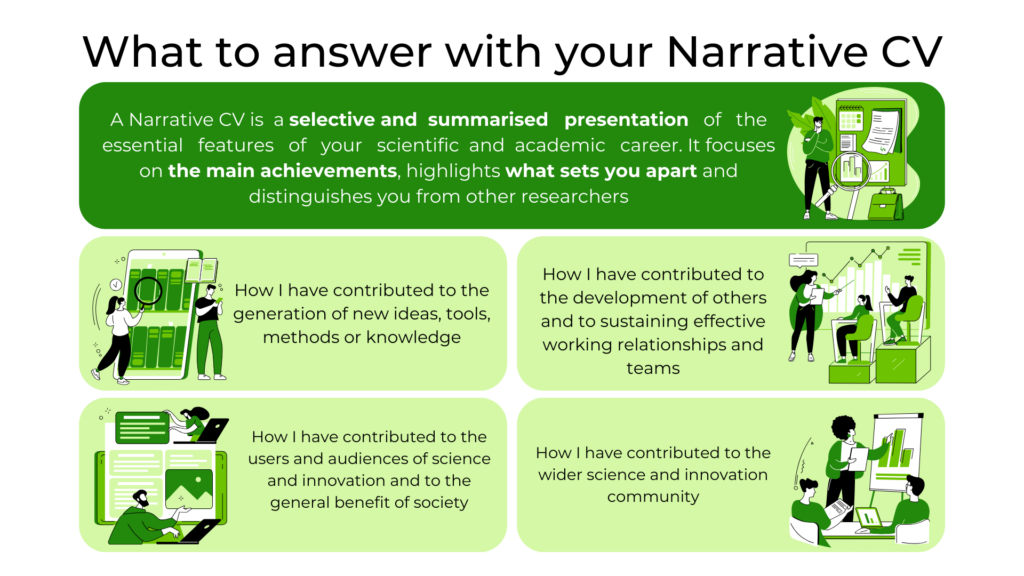
Narrative bibliometrics is an evaluation tool that allows the use of bibliometric indicators to generate stories and narratives that allow the defense and exposition of a scientific curriculum and/or its individual contributions within the framework of the new evaluation policies promoted by CoARA.
Here are some past training sessions from the IE University Library designed to help you create, link and manage your Researcher profiles:
Remember that you can check past IE Library training sessions, including those about your researcher profile here! We also provide a calendar of upcoming sessions.